
Solar Heating Systems
Solar Water Heaters, Built for the Climate They Have to Survive.
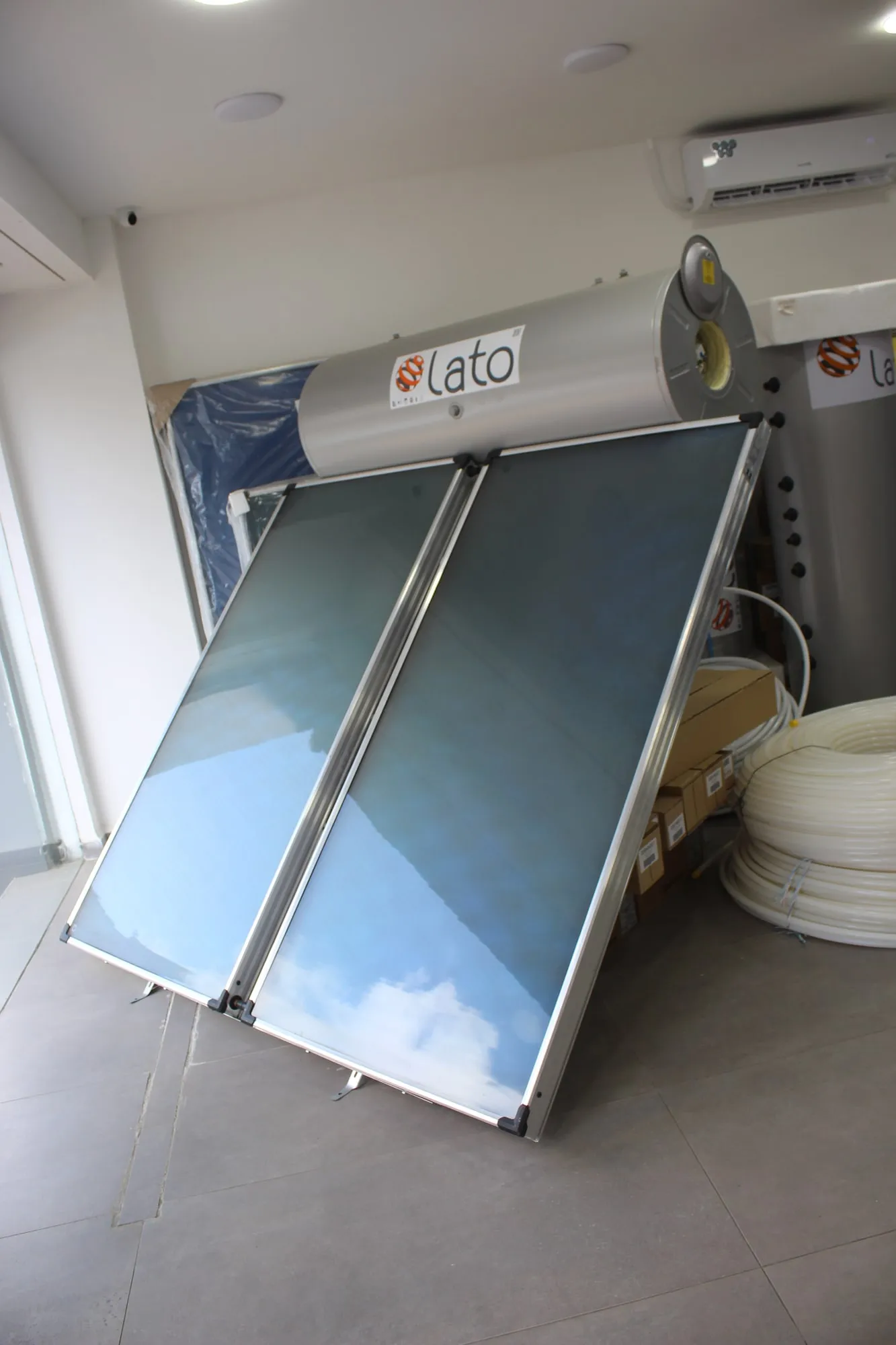
Pressurised solar hot water for homes and projects, plus pool heating, from Lato of Greece: a manufacturer building for the same sun, the same hard water and the same thermal cycling as Jordan.
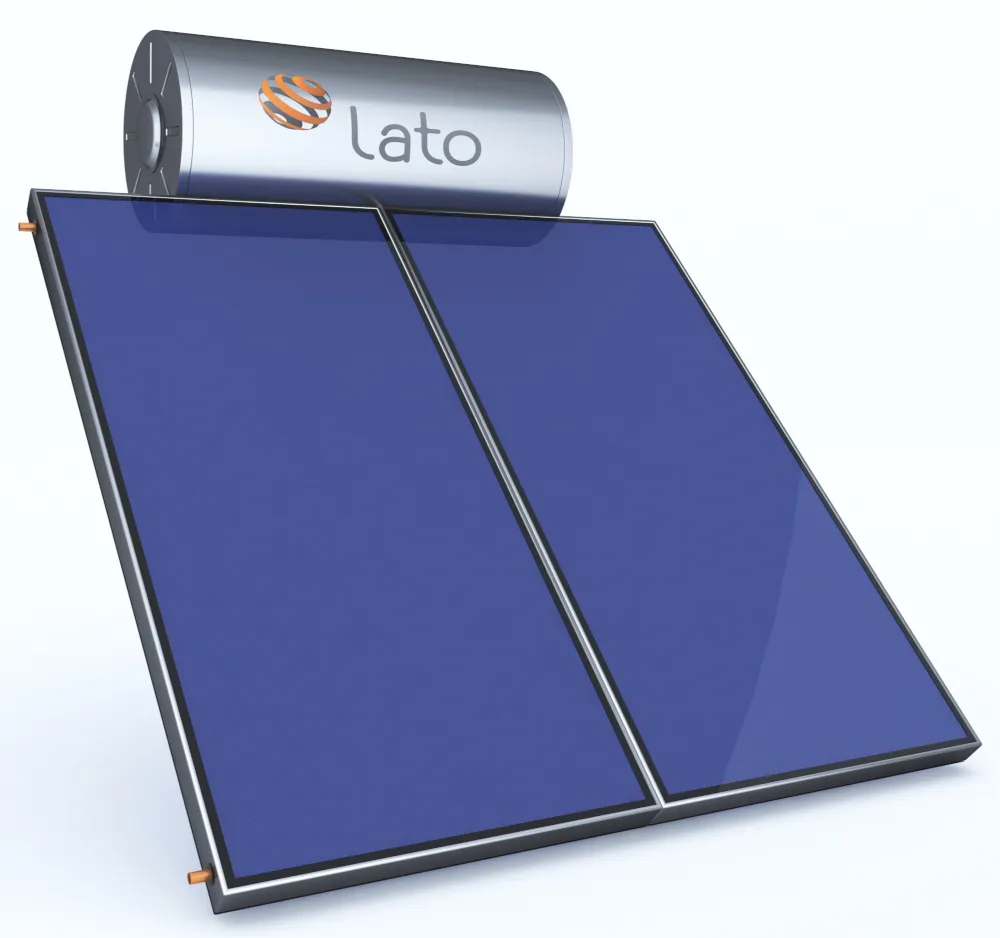
In brief
Pressurised solar water heaters, 200 and 300 litres, sold direct
If you are buying a solar heater for your home, this is what matters, before the technical case below.
- Price
- A complete system, meaning collectors, tank, frame, fittings and specification, typically falls between 800 and 1,100 JOD including sales tax. We confirm the figure within a day of seeing your roof.
- Capacity: 200 or 300 litres
- Two standard capacities across four complete configurations, with collector area matched to tank capacity. As a rough guide, 200 litres suits a household of up to four and 300 litres a household of five to seven, on 40 to 50 litres of hot water per person per day. More bathrooms, or a pool, push you to the larger tank. We confirm the capacity with you before you order.
- We sell to homeowners direct
- No minimum order size. We supply rather than install, and refer you to qualified installers for the work itself.
- Government support
- JREEEF covers part of the cost, and the collectors we supply are Solar Keymark certified, the European standard the programme's equipment criteria are built on.
Why Lato
Jordan is one of the most solar-rich countries on the planet, so specifying solar thermal should be easy. Yet it is often done poorly: cheap collectors paired with under-specified tanks and unprotected hardware, producing systems that disappoint within five years.
Lato is a Greek manufacturer of solar thermal systems. The reason we selected Lato is simple: they manufacture for the Mediterranean basin, which means they build for the same solar intensity, the same water hardness patterns, and the same thermal cycling that Jordanian projects experience every day. These systems are not imports from a fundamentally different climate. They are native to conditions like ours.
Key Benefits
- 10-year warranty on the tank and collectors: manufacturer warranty, honoured by Lato because we supply direct. Five years on other parts, one on the electric element
- Pressurised system, at mains pressure: tanks rated to 8 bar working pressure, so showers and mixers run at the same pressure as the rest of the house
- Four complete configurations, 200 L and 300 L: matched collector area and tank capacity, sized to household size rather than sold as loose parts
- Solar Keymark certified collectors: tested to EN ISO 9806 / EN 12975, the European standard Jordan's own subsidy programme builds its equipment criteria on
- Corrosion-resistant tank construction: vitreous-enamel lined and rated to 8 bar working pressure, for long service in hard-water regions
- Optional backup element in the same tank: 2.5 kW or 3.5 kW immersion element with its own thermostat, so cold overcast days are covered without a second cylinder
Who This Is For
- Families fitting a solar water heater for the first time, or replacing one that has failed, whether that is a villa, an apartment or a family building. We sell to homeowners directly, with no minimum project size.
- Anyone building or renovating where Law 73 makes a solar water heater a condition of the permit: private homes over 250 m², apartment buildings over 150 m², offices over 100 m².
- Developers and consultants specifying hot water for villa and apartment projects, where lifetime running cost and sustainability credentials carry weight.
- Hotels, guesthouses and pool owners, residential or commercial, with heavy hot water demand or a swimming season worth extending.
Solar water heating is one of the clearest economic wins available in the Jordanian market: short payback, and operating costs close to zero after it. The only thing that ruins that calculation is a badly specified system. So our selection rests on one principle: every component has to survive the climate it works in for the life it is sold on. High-transmittance solar glass and durable absorber coatings in the collectors, tanks built to resist the corrosion patterns typical of water in this region, and mounting hardware engineered for the wind loads and thermal movement of an exposed roof.
We supply flat-plate collectors rather than evacuated tubes. Tubes do collect better on a cold January morning, but a solar heater is sized on annual yield, and across a Jordanian year the balance runs the other way: flat plate handles stagnation heat better, has no glass tubes to crack, and is far easier to keep clean of dust. The cold mornings are covered by the element in the tank, not by the collector. There is more on that trade-off in the questions below.
For pool heating, Lato systems extend the usable season on both ends, bringing shoulder-month swimming within reach for residential owners and commercial operators alike, at a fraction of the running cost of conventional pool heating.
We supply full Lato systems and pair every supply with a sizing and orientation review covering collector area, tank capacity, mounting angle and integration with auxiliary heating sources.
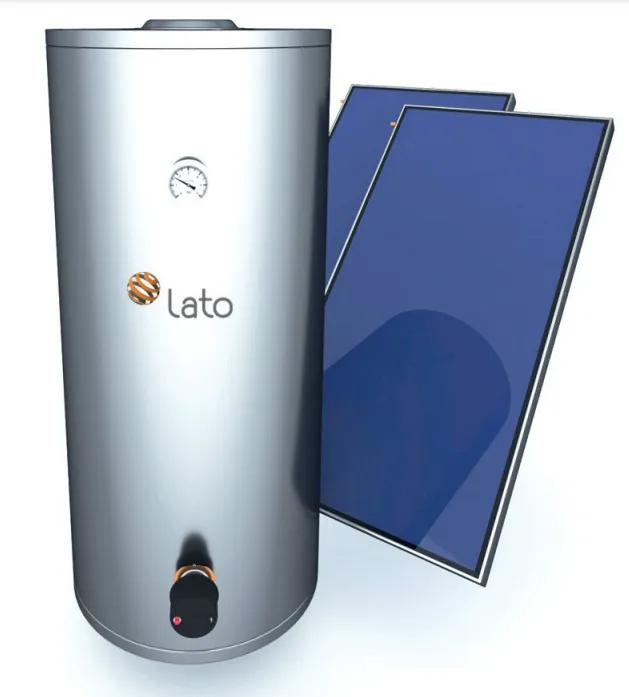
Solar Carries the Base Load, Not the Whole Load
The collectors deliver what the sun delivers. The rest is specification: what covers the shortfall, and what holds the array on the roof.
Bongioanni Boilers
The collectors preheat the stored water and the boiler makes up the shortfall: the auxiliary heat source runs less, and it still has to be there for the days the sun is not.
View the systemFischer Fixing Systems
The mounting hardware comes with the Lato system; what ties it to the roof slab is a fixing into the structure, carrying wind load and thermal movement on an exposed roof for the life of the array.
View the systemWhere the roof fixings are specified with the system, we can supply the Fischer range, including A4 stainless steel where the exposure demands it.
Four Systems. Pick by Household, Not by Guesswork.
Solar hot water is bought in litres, and the two numbers that matter are tank capacity and collector area. Capacity sets how much stored hot water you have; collector area sets how fast it comes back after you use it. These are the four complete configurations we hold, and the sizing review confirms which one your roof and your household actually need.
200 L + 2.5 m² (one collector)
The standard household system: roughly three to four people at typical Jordanian consumption. The most commonly specified configuration, and the starting point unless something about the site says otherwise.
200 L + 3.0 m² (two collectors)
The same storage with more collector area. Choose it when winter performance matters, when the roof faces less than ideally, or when a smaller household draws heavily at one time of day.
300 L + 3.0 m² (two collectors)
The larger tank for a five- to six-person household. More stored volume absorbs a morning peak without running the auxiliary heat source.
300 L + 4.0 m² (two collectors)
Maximum storage with maximum collector area. Specified for large households, heavy winter demand, or where a boiler top-up should be needed as rarely as possible.
Technical & Compliance Hub
Official technical compliance certificates and system declarations from the manufacturer.
| Feature | Specification |
|---|---|
| Collector Model Types | Lato high-selective flat plate solar collectors |
| Absorber coating | Selective blue titanium (high transmittance glass) |
| Tank Capacity Options | 200, 300 Litres (standard residential configurations) |
| Tank Construction | Vitreous-enamel glass-lined steel with magnesium anode |
| Working Pressure Rating | Tank: 8 Bar maximum; Collector loop: 6 Bar maximum |
| Insulation Thickness | 50mm high-density polyurethane (CFC-free) |
| Warranty | 10 years on the tank and collectors; 5 years on other components; 1 year on the electric element |
| Backup Heating | Optional 2.5 kW or 3.5 kW 230 V immersion element, flange-mounted in the tank with its own thermostat |
| Certification | Solar Keymark (EN ISO 9806 / EN 12975) |
Lato Solar Systems in Completed Projects
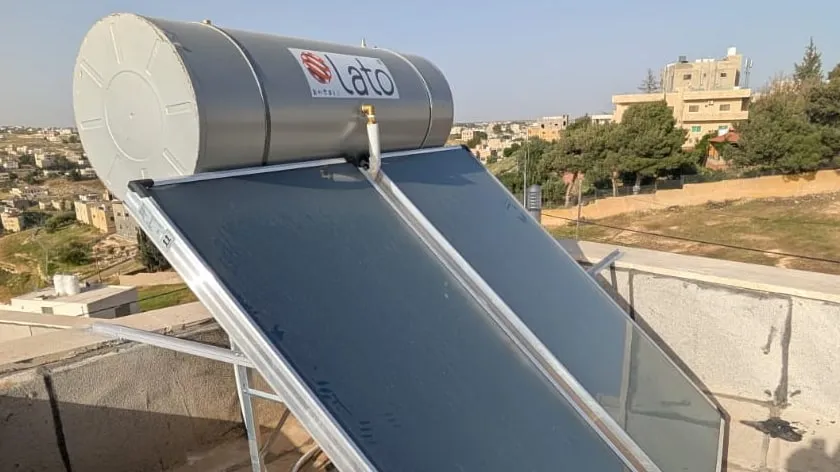
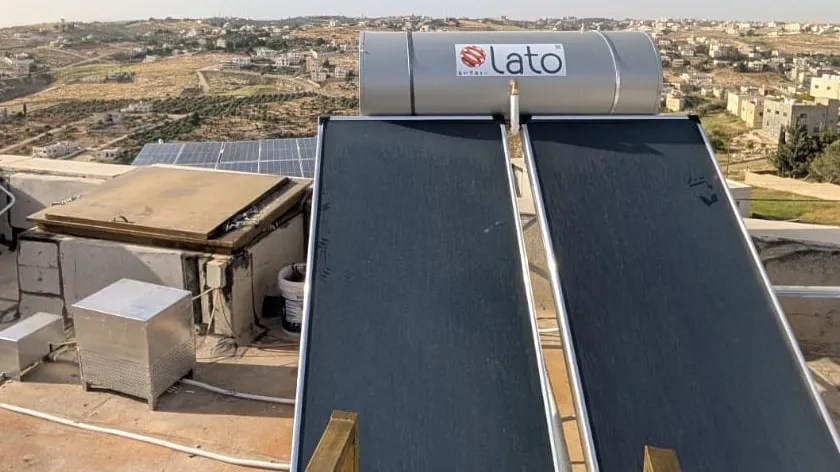
The Jordanian government subsidises part of the cost of a domestic solar water heater. The two funding tiers, and who qualifies for each, are worth understanding before you buy. And if the heater you already own has stopped rather than needs replacing, the usual causes are the anode, the immersion element or its thermostat. All three are stock items, whoever built the tank.
Frequently Asked Questions
How much does a solar water heater cost in Jordan?
A complete Germania system, meaning collectors, tank, frame, fittings and specification, typically falls between 800 and 1,100 JOD including sales tax, and we confirm the figure within a day of seeing your roof. Four things move it: tank capacity, collector area, whether the roof needs structural fixing, and whether the system has to integrate with an existing boiler. You will find solar heaters advertised in Jordan from around 140 JOD. Those are a different class of product, and the difference shows up in year six, when a thin tank starts to corrode and the replacement costs more than the original saving.
Is it a pressurised system?
Yes. The tanks are rated to 8 bar working pressure and run at mains pressure, so a shower fed from the solar heater has the same pressure as the rest of the house. That is what is being asked for when someone specifies a pressurised solar heater, and it is the difference between a system you forget about and one you notice every morning.
Flat plate or evacuated tube: which is better for Jordan?
Both work, and they are optimised for different problems. Evacuated tubes recover better in cold and dim conditions, which is why they dominate in northern Europe. Jordan has the opposite conditions: very high radiation, long hot summers and hard water. A flat-plate collector handles stagnation heat better, has no glass tubes to crack under hail or debris, and avoids the per-tube failures that turn a roof array into a maintenance schedule. That is why we supply flat plate. If your site is unusually cold or shaded, tell us and we will say so honestly.
Does it still work in winter?
It works, but it does not carry the whole load, and it is not designed to. On a clear Jordanian winter day a correctly sized system still delivers usable hot water; through a run of cold overcast days it will not reach temperature on solar alone. That is what the electric backup element is for: an optional 2.5 kW or 3.5 kW immersion element that mounts through a flanged port into the same tank, with its own thermostat, so there is no second cylinder and no extra plumbing. Solar carries the base load across the year, the element covers the gap on the days that need it, and you size the collectors for annual yield rather than paying for area you would only use for a few weeks.
Can I get the government subsidy on this system?
JREEEF runs two programmes: a general one covering around 30% of the cost, and a 50% programme means-tested at 750 JOD of combined household income with no more than one vehicle. The collectors we supply are Solar Keymark certified, which is the European standard the programme's equipment criteria are built on. Programme terms, eligibility and approved-supplier requirements change, so confirm them directly with JREEEF at solarenergy.gov.jo before committing to anything.
What warranty comes with it, and what maintenance does it need?
Ten years on the tank and the collectors, five on the other components, one on the electric element. That is manufacturer warranty, honoured by Lato, because we supply direct with no middleman between you and them. Maintenance is minimal but not zero: the magnesium anode inside the tank is a sacrificial part that protects the steel, and in Jordanian water it should be checked every three to five years and replaced when spent. We stock anodes, flanges, heating elements and thermostats, so a system we supply stays serviceable for its whole life.